Packing is one of the most important parts of travel preparation. Poor packing leads to stress, wasted money, and inconvenience during the trip. Smart packing is not about carrying more items. It is about carrying the right items in the right way.
This guide explains how to pack efficiently for any type of trip. It applies to domestic travel, international travel, short trips, and long trips. The focus is on planning, organization, and avoiding common packing mistakes.
Why Smart Packing Matters
Packing affects comfort, mobility, cost, and safety. Overpacking causes luggage issues, while underpacking leads to unnecessary purchases. Smart packing balances needs with limits.
Good packing helps you:
- Move easily
- Avoid baggage fees
- Find items quickly
- Reduce stress
- Handle unexpected situations
Understand Your Trip Before Packing
Packing should start with trip analysis.
Before packing, identify:
- Destination country or city
- Trip duration
- Climate during travel dates
- Activities planned
- Airline baggage rules
- Accommodation type
Packing without understanding these factors leads to poor decisions.
Check Airline Baggage Rules
Airline baggage rules vary.
Always check:
- Carry-on size limits
- Checked baggage weight limits
- Personal item rules
- Restricted items list
Ignoring baggage rules often results in extra fees or item removal at the airport.
Choose the Right Luggage
Luggage choice affects mobility.
Main options include:
- Carry-on suitcase
- Checked suitcase
- Backpack
- Duffel bag
For short trips, carry-on luggage reduces time and cost. For long trips, choose luggage with strong wheels and secure locks.
Make a Packing List
A packing list prevents forgetting items and avoids overpacking.
Create categories:
- Documents
- Clothing
- Toiletries
- Electronics
- Health items
- Miscellaneous items
Write the list several days before departure and revise it.
Pack Documents First
Documents are the most important items.
Carry these in an easily accessible place:
- Passport
- Visa
- Tickets
- Accommodation confirmations
- Insurance documents
- Emergency contacts
Keep digital copies stored securely online.
Clothing Packing Strategy
Clothing takes the most space.
Pack based on:
- Climate
- Activities
- Laundry availability
Choose clothing that can be reused and mixed. Avoid packing items you rarely wear at home.
Use the Rule of Outfits
Instead of packing by items, pack by outfits.
Plan:
- Daily outfits
- Sleepwear
- One backup outfit
- Activity-specific clothing
This method reduces unnecessary items.
Limit Shoes
Shoes are heavy and bulky.
Most trips only need:
- One walking pair
- One alternate pair
Wear the heavier pair during travel to save space.
Roll Instead of Fold
Rolling clothes saves space and reduces wrinkles.
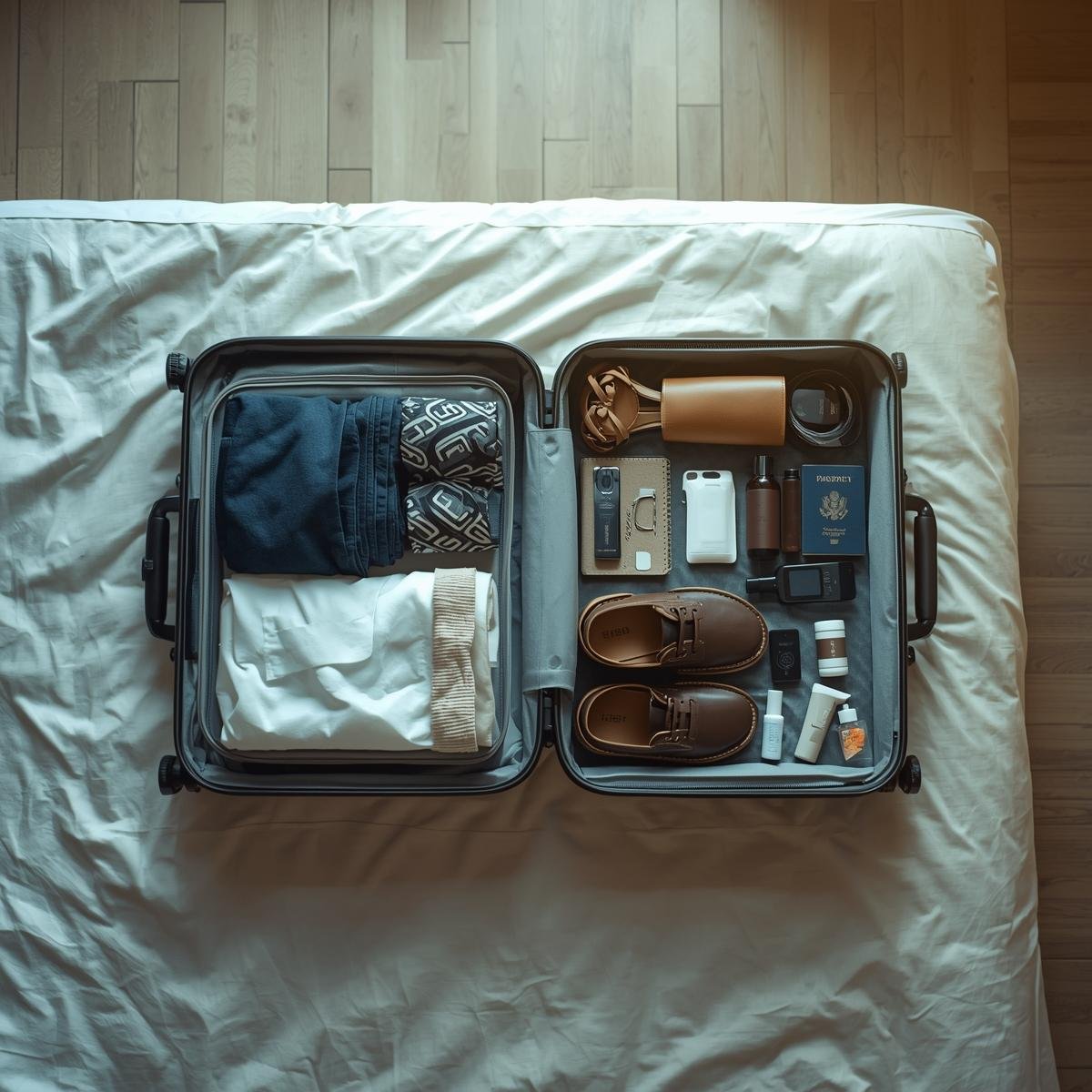
This method also allows better visibility inside luggage.
Use packing cubes if available to separate categories.
Packing Toiletries Smartly
Toiletries often cause leaks and issues.
Follow these rules:
- Use travel-size containers
- Place liquids in sealed bags
- Follow airport liquid rules
- Avoid carrying items easily available at destination
Check accommodation amenities before packing toiletries.
Medication and Health Items
Health items should never be packed randomly.
Carry:
- Prescription medication
- Copies of prescriptions
- Basic medication
- Personal health items
Keep medication in carry-on luggage.
Electronics and Accessories
Electronics require planning.
Pack:
- Phone
- Charger
- Power adapter
- Power bank if allowed
Avoid carrying unnecessary devices. Label chargers to prevent loss.
Packing for Weather Changes
Weather can change unexpectedly.
Pack:
- One layer for temperature changes
- Rain protection if needed
- Sun protection items
Check weather forecasts close to departure.
Packing for Security Checks
Airport security has restrictions.
Avoid packing in carry-on:
- Large liquids
- Sharp items
- Restricted tools
Place electronics in accessible sections to reduce delays.
Weight Distribution in Luggage
Weight balance prevents damage and strain.
Pack heavier items near wheels. Place fragile items between soft clothing.
This improves luggage stability.
Pack a Small Essentials Bag
Carry a small bag for essentials.
Include:
- Documents
- Phone
- Wallet
- Medication
- Charger
This bag stays with you at all times.
Prepare for Delays and Loss
Packing should consider worst cases.
In carry-on luggage, include:
- One change of clothes
- Basic toiletries
- Important items
This helps if checked luggage is delayed.
Avoid Overpacking “Just in Case” Items
Many people overpack for unlikely situations.
Avoid packing items you have not used in the last year. Most items can be purchased if needed.
Packing for Different Trip Types
Packing changes by trip type.
Examples:
- City travel: focus on walking comfort
- Beach travel: pack light clothing
- Business travel: pack formal wear
- Adventure travel: pack activity gear
Adjust packing list accordingly.
Packing for Cultural Rules
Some destinations have dress expectations.
Research:
- Clothing restrictions
- Modesty rules
- Footwear customs
Pack clothing that respects local rules.
Use Laundry Options
Laundry reduces packing needs.
Check:
- Hotel laundry services
- Self-service laundromats
- Hand-wash options
This allows fewer clothing items.
Packing Food Items Carefully
Food packing rules vary by country.
Avoid carrying restricted food items. Check customs rules to prevent fines or confiscation.
Organize for Easy Access
Organization saves time.
Use separate sections or cubes for:
- Clothing
- Toiletries
- Electronics
- Documents
Avoid digging through luggage repeatedly.
Final Luggage Check
Before departure:
- Remove unnecessary items
- Check weight
- Secure zippers
- Attach identification tags
A final check prevents last-minute issues.
Packing on Return Trip
Leave space for return items.
Use packing bags for separation. Avoid overloading luggage to prevent damage.
Common Packing Mistakes
Avoid these mistakes:
- Packing too much clothing
- Ignoring baggage limits
- Forgetting documents
- Packing prohibited items
- Carrying valuables unnecessarily
Awareness prevents problems.
Final Thoughts
Smart packing is a skill that improves with experience. The goal is not to pack everything but to pack effectively. With planning, organization, and discipline, packing becomes simple and stress-free.
This guide provides a packing system that works for any trip type and destination.